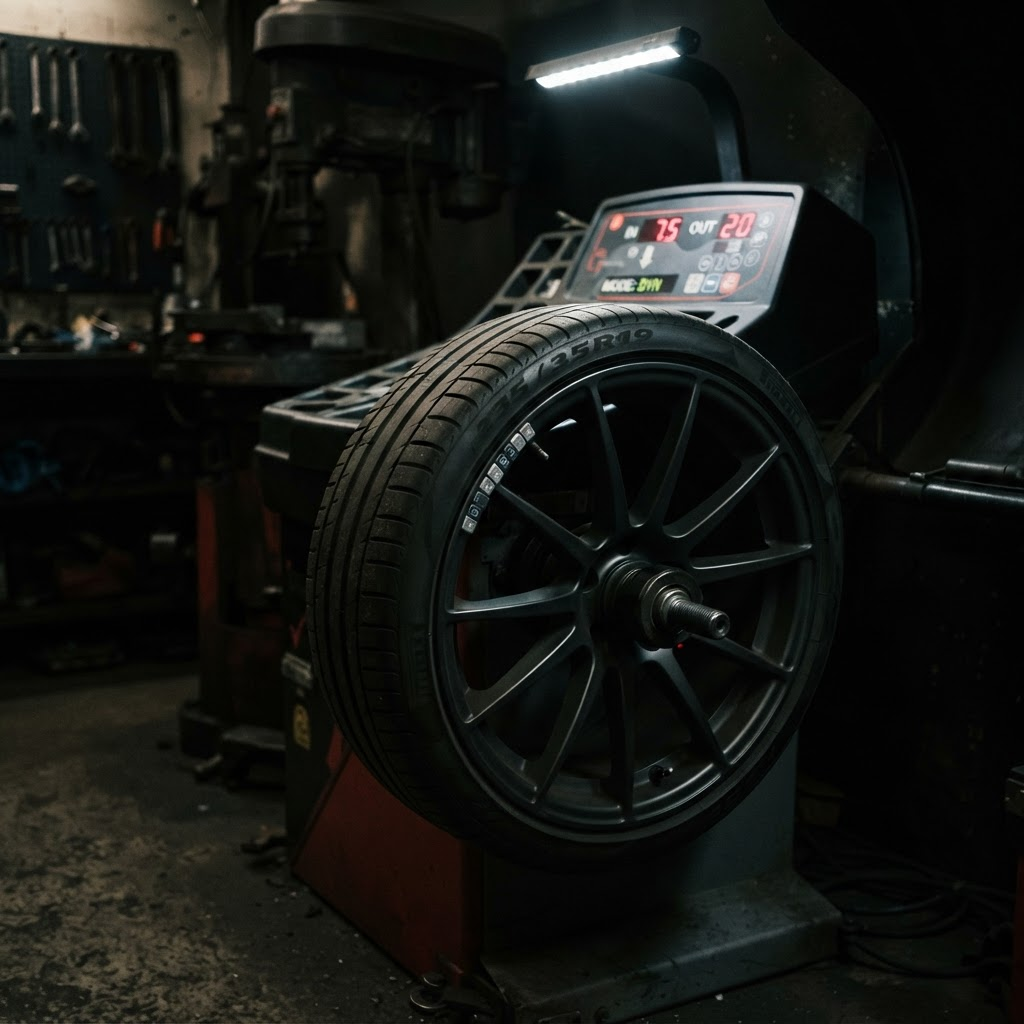
Wheel balancing is one of those jobs that quietly makes a big difference. Get it right and you barely notice — your car simply drives smoothly. Get it wrong and you feel it through the wheel, and your tyres pay the price. Here is what it actually means and why it matters.
What is wheel balancing?
No tyre and wheel combination is perfectly even in weight all the way round. Balancing puts the wheel on a machine that spins it to find any heavy spots, then small weights are added to the rim to even things out. The result is a wheel that spins true at any speed.
Signs your wheels are out of balance
- Vibration through the steering wheel, especially at 50–70 mph
- A wobble felt through the seat or floor
- Uneven or patchy tyre wear
- The vibration getting worse as you speed up, then easing off
Why it matters
An unbalanced wheel does more than just feel annoying. That constant vibration accelerates tyre wear, puts extra strain on your wheel bearings and suspension, and can make the car harder to control at speed. Left unchecked, a small balancing issue can lead to much bigger repair bills.
When should you get it done?
You should have a wheel balanced whenever a new tyre is fitted to it. It is also worth checking the balance if you notice vibration, after hitting a serious pothole, or if a balance weight has fallen off the rim.
Every tyre we fit is balanced on site as standard, using professional equipment we carry in the van. So whether you need a single new tyre or a full set, you drive away with a smooth, safe ride — without ever visiting a garage.